
The contemporary fashion landscape is undergoing a structural rejection of hyper-accelerated trend cycles. This shift is reflected in the latest Bain-Altagamma Luxury Goods Worldwide Market Study, which projects global luxury spending growth of just 0% to 2% in 2026 — a sharp deceleration alongside a continued contraction in the active consumer base, which fell from roughly 400 million in 2022 to around 340 million in 2025.
The infrastructure of mass-disposable luxury has reached a point of saturation; consumers are showing fatigue toward flat, fast-moving aesthetics engineered for transient digital traffic. True luxury durability increasingly depends on a shift from reactive trend forecasting to disciplined curatorial strategy — and that discipline is showing up across every layer of the industry, from who brands sell to, to how they distribute, to how they show.
Who luxury actually sells to
Bain’s own reporting points to a growing gap between elevated pricing and perceived value: inflated prices and a creativity crisis have cost luxury brands 60 to 70 million customers over the last two years, with attrition concentrated among aspirational buyers. Yet spending power remains highly concentrated at the top. According to McKinsey’s State of Luxury: Fashion report, ultra-high net worth clients make up only 2% to 4% of luxury’s client base, but account for 30% to 40% of the sector’s total spend.
Directing a global fashion desk today means understanding that value is no longer generated by volume or raw visibility. Marketplace relevance in the coming cycles belongs to the brands and platforms with the discipline to prioritize timeless design and cultural substance over disposable novelty.
How luxury is choosing to sell
That same discipline is reshaping distribution. In luxury hubs like Manhattan, scaling retail pipelines without compromising brand equity requires real operational rigor. According to JOOR’s 2025 wholesale trends report, independent retailers now account for 59% of total wholesale transaction volume on the platform, up from 47% five years ago — a sign that brands are increasingly choosing controlled, curated relationships over broad wholesale reach. That choice is itself a form of operational discipline: fewer doors, more control. At the same time, luxury brands more broadly are investing in their own DTC channels, flagship stores, and pop-ups to retain greater control over pricing and customer experience, according to CBIZ’s analysis of the sector.
From the production side, this shift is visible before it shows up in any report: buyers are asking fewer questions about trend and more about inventory discipline — how a collection will actually move, not just how it will photograph.
What this means for the runway
Reflecting on the infrastructure requirements for the upcoming September showcases, a presentation cannot function merely as an aesthetic display — it requires the same operational discipline brands are now applying to distribution. The future of fashion week execution belongs to directors who treat production and inventory planning as strategic decisions, not just cost centers.
Fashion isn’t a disposable commodity — it remains a meaningful part of social identity. But identity alone no longer protects margin. Operational discipline is no longer a backstage concern — it’s the last credible differentiator luxury has left. Everything else can be copied by Tuesday.
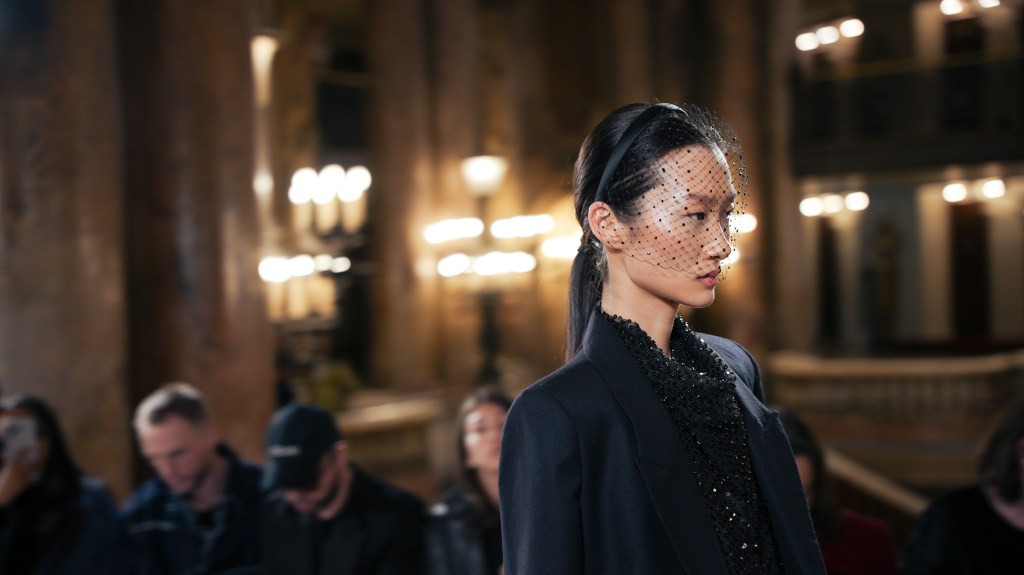
Photography: Mizz Brusnika – Paris Fashion Week, 2026.
Sources
- Bain & Company / Altagamma, Global luxury stays resilient despite economic headwinds and shifting consumer trends that reshape market — https://www.bain.com/about/media-center/press-releases/20252/global-luxury-stays-resilient-despite-economic-headwinds-and-shifting-consumer-trends-that-reshape-marketbain–company-and-altagamma/
- Business of Fashion, Luxury Set for 2026 Revival but Shoppers ‘Betrayed’ by Pricing, Bain Says — https://www.businessoffashion.com/news/luxury/luxury-sector-to-revive-in-2026-but-price-hikes-leave-shoppers-betrayed-bain-says/
- McKinsey, State of Luxury: Fashion, via Fashion Dive — https://www.fashiondive.com/news/luxury-fashion-market-growth-slow-2025-2027/737167/
- JOOR, 2025 Wholesale Trends Report, via FashionNetwork — https://us.fashionnetwork.com/news/Joor-wholesale-trends-include-lower-luxury-prices-and-dtc-brands-opting-for-wholesale,1685045.html
- CBIZ, How Luxury Retailers Are Navigating Today’s Challenges — https://www.cbiz.com/insights/article/how-luxury-retailers-are-navigating-todays-challenges


Leave a comment