
Co-Founders, Fashion Forward
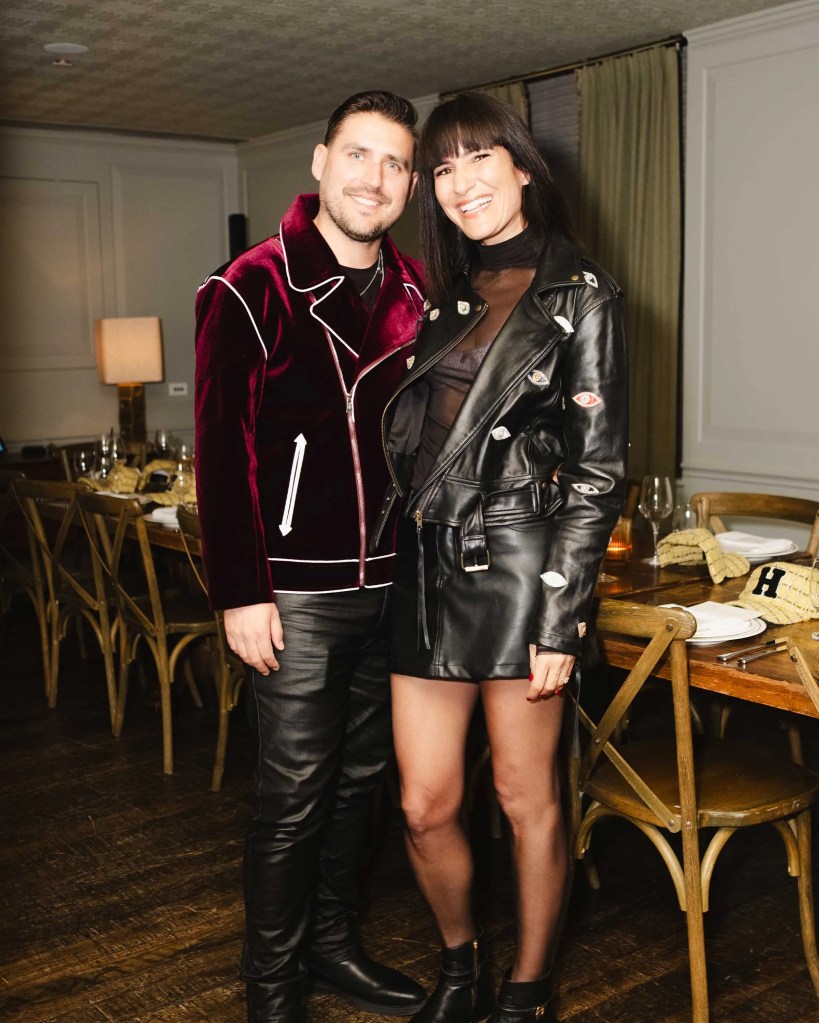
There is a version of “building community” that has become so common in this industry it barely means anything anymore — a LinkedIn post, a curated guest list, a step-and-repeat with the right names in front of it. Jordana Guimaraes and Christopher Hunt are building something that deliberately refuses that shorthand.
Guimaraes spent years co-building Fashinnovation, bringing fashion and technology into conversation at an industry scale. Fashion Forward, the invitation-only cultural institution she now co-founded with Hunt, is not a second version of that first project. It is what happened when she got curious about a different question entirely: not how industries talk to each other,
but how people do — designers next to philosophers, athletes next to artists, nobody in the room because a business outcome required it.
Fashion Forward is built around five stated principles — Honor, Originality, Unity, Strength, and Empathy — and organized around depth rather than scale. Its founding community has already been featured by WWD and Vogue Philippines. Its first in-person House dinner takes place in New York this September, the moment, as Guimaraes puts it, when something built digitally
becomes physical for the first time.
What follows is a conversation about what actually happens in the space between an introduction and a real relationship — and why so few people, even ones who call themselves curators, know the difference. The questions below were deliberately built to move past the usual territory — what Fashion Forward is, who’s involved, what it looks like — and toward something harder to articulate: why it’s built the way it is, and what that says about how Guimaraes and Hunt actually think about people, rooms, and intention. Both said as much themselves: the questions sparked a conversation between the two of them before either wrote a word down.
You’ve said the most important conversations in fashion often begin outside of fashion itself. What’s a specific moment where an outsider’s perspective actually changed how you saw the industry?
Jordana: For me, it happened gradually, through conversations with people who had absolutely nothing to do with fashion. I spent years in an environment where everyone was essentially speaking the same language — even when we disagreed, we were starting from the same assumptions. Then I started talking to people from completely different worlds and realized they weren’t just giving me different answers. They were asking completely different questions.
Someone from philosophy might stop a conversation about aesthetics and ask what we actually mean by beauty. Someone from sport might look at fashion through belonging, identity, and community. Those conversations made me realize I didn’t want to build another place where fashion people talked only to fashion people about fashion.
Christopher: That’s also where Jordana and I really meet. I’ve always been fascinated by what happens when people who don’t necessarily belong in the same room on paper actually sit down and listen to one another. Sometimes the person who knows the least about your industry asks the question nobody inside it thought to ask, because everyone else already accepted the rules. Fashion is influenced by music, sport, art, film, food, philosophy, cities, identity —
everything around us. So why would the conversation about its future only include people who work in fashion?
Fashion Forward is built around five principles — Honor, Originality, Unity, Strength, and Empathy. Which one is hardest to actually enforce when you’re deciding who gets an invitation and who doesn’t?
Jordana: Empathy. Easily. You can’t find empathy on LinkedIn. Someone can have the most extraordinary résumé in the world and still not be right for the House. I’m looking at what someone has accomplished, of course, but I’m also constantly asking: will this person actually listen? Will they be curious about the person sitting next to them if that person can’t immediately do something for them? That’s much harder to judge than credentials — and yes, that sometimes means someone who would look impressive on a member list isn’t necessarily
right for the room.
Christopher: I agree, but I’d add unity. Unity doesn’t mean everyone agrees — that would be incredibly boring. It means you can disagree and still remain curious about the person across from you. If everyone just wants to prove they’re right, the whole thing falls apart. The people who interest us are confident enough in what they know to also be genuinely interested in what they don’t know.
You co-founded Fashinnovation before Fashion Forward. What’s something you got wrong the first time that you deliberately built differently the second time?
Jordana: I actually wouldn’t describe Fashinnovation as something I “got wrong.” I’m incredibly proud of what I helped build, and it has a very clear place in the industry, particularly around B2B conversations and where fashion and tech intersect. What changed was me — I became increasingly curious about conversations that sat outside those boundaries. Not because other industries need to “solve” fashion, but because culture doesn’t operate in separate boxes in real life.
Christopher: Fashion Forward really came from that question. We weren’t interested in recreating something Jordana had already built. We wanted to explore what happens when the intersection isn’t between businesses or sectors, but between people — when nobody’s in the room because they’ve been told exactly what business outcome needs to come out of it.
Jordana: With Fashion Forward, the intersection we’re most interested in is human. It’s culture.
It’s the unexpected relationship between people who might never have imagined they had a reason to know one another. And there’s something else I’ve become conscious of: I’m less interested now in how many people we can bring together, and much more interested in which people. Eight or ten people around a table can go somewhere a room of thousands simply can’t.
I don’t see Fashion Forward as replacing what came before. I see it as an evolution of what I became curious about next.
What’s the actual difference between introducing two people and curating a relationship between them — where does one become the other?
Jordana: “An introduction is easy. “Aries, meet Christopher. Christopher, meet Aries. You guys should know each other.” Done. But why? That’s the part I’m obsessed with. Why should these two people know one another? Why now? What is one of them looking for? What can the other bring? That’s curation to me.
Christopher: Sometimes Jordana sees connections that make absolutely no sense to me at first — and then six months later, something has happened between those people. The other important part is not trying to control it.
Jordana: I can create the introduction and explain why I think there’s something there. Then I need to get out of the way. I don’t get to decide what the relationship becomes. My job is recognizing that there might be a reason for it to begin.
Tell me about a connection you made that turned out completely differently than you expected — for better, or for worse.
Jordana: This has happened so many times. I’ve introduced people because I thought there was a business reason for them to meet, and they’ve become genuine friends. I’ve thought two people might collaborate, and instead one ends up mentoring the other. That’s probably what taught me you can’t over-engineer human connection.
Christopher: That matters for Fashion Forward because we don’t want every conversation to have an agenda attached to it. There’s so much networking now where before you’ve even said hello, you’re thinking: what can this person do for me? That’s exhausting. Sometimes two interesting people should just meet.
Jordana: And I’ve learned something else. The best connections are probably the ones where, eventually, they forget I introduced them. I don’t need every relationship to keep coming back through me. If two people build something meaningful and five years later I’m completely irrelevant to their relationship, that’s a success. We want to build something where eventually people are calling each other, collaborating, opening doors for one another without needing us
to orchestrate every move. At that point, it’s no longer just our House. It belongs to the people inside it.
The most remarkable aspect of this conversation is not merely the five principles or the evolution from Fashinnovation to Fashion Forward—however solid that philosophy may be—but the admission implicit in the final answer: a curator’s goal, when doing the job well, is to eventually become irrelevant to the very thing they built. It is a discipline that is truly difficult to maintain in an environment designed for the exact opposite: a landscape where most professional interactions have become digital, transactional, and largely hollow—optimized to maximize the volume of contacts rather than the quality of what follows the initial introduction.
The real question is whether this discipline will endure as the organization transcends as-yetundefined boundaries, and how it will adapt to environments demanding broader curation— precisely because relationships between industry peers have become so sterile from the outset.
It will be interesting to closely follow this evolution, starting with the first in-person gathering in New York on September 17.
The dinner was held as an inaugural event in New York on September 17, and today I’m sharing the Fashion Forward update and what came next.
The Ledger 1.1: The Room Is the Product
A follow-up conversation with Jordana Guimarães and Christopher Hunt, three months into building Fashion Forward.
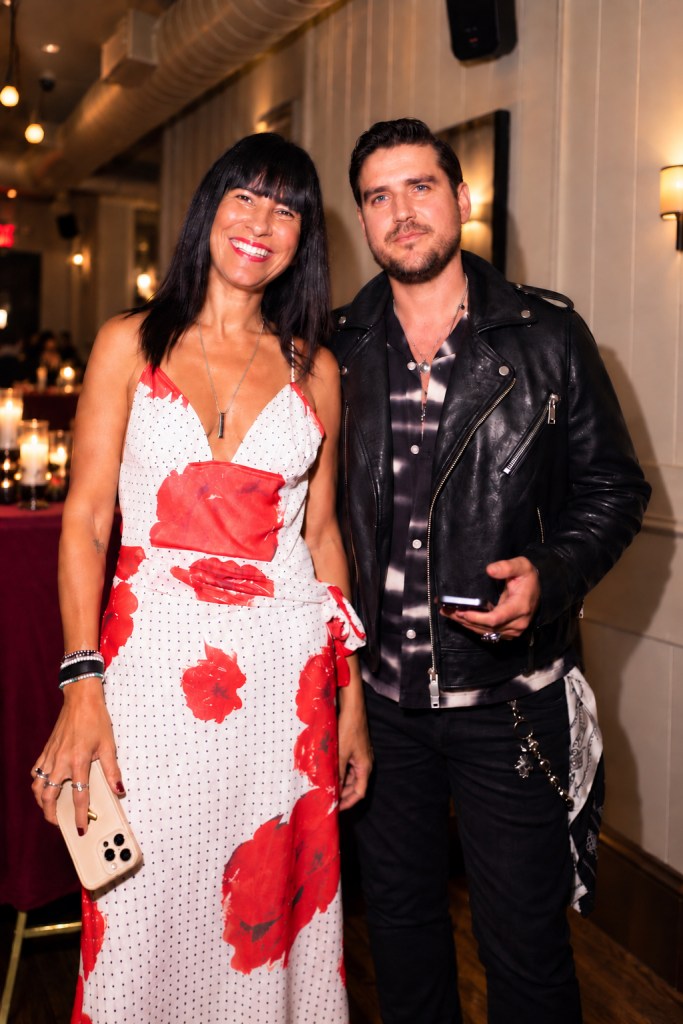
When I first sat down with Jordana Guimarães to talk about Fashion Forward, it was still largely a premise — a bet she and Christopher Hunt were making that fashion’s future would be shaped through culture, not scale. There was no House yet. No dinner. No Founding 100.
Since then, there is. And the number itself — 100 Founding Voices, Honorary Founding Members and Advisors, spanning fashion, art, media, business, academia, sport and culture — was never really the story. The story is what that number did, and didn’t do, to the thing Jordana and Christopher said they were protecting from the start.
So I went back to both of them with the same question underneath five different ones: does depth survive scale, or does scale eventually eat it?
When did you first feel the premise — depth over scale — actually hold up under real growth, rather than just in theory?
“I think the first time I really felt it was during one of our early digital gatherings,” Jordana says. “We had people joining from completely different worlds, different countries, different stages of their careers — people who, on paper, might never have ended up in the same conversation. And instead of everyone introducing themselves through titles or asking, ‘What can you do for me?’, the conversation became incredibly human very quickly. People stayed. They listened to one another. They followed up with each other afterward.”
That was the moment, she says, she realized the premise was working. “For Christopher and me, ‘depth over scale’ was never supposed to mean staying small. It means that growth cannot come at the expense of intimacy. If 100 people can still feel seen, heard and connected to something larger than themselves, then scale and depth do not have to be opposites.”
A hundred Founding Voices is a number, but the House is built on who says no to joining as much as who says yes. What did you turn away to protect that?
“We said no to the idea that a recognizable name automatically earns a seat,” Jordana says. There were people, she admits, who could have been pursued simply because their names or companies would have looked impressive on a membership list. “That was never enough for us.”
The harder line was around intent. “We also became very conscious of people approaching the House purely transactionally — ‘What will I get?’ without any curiosity about ‘What can I bring?’ That doesn’t mean members shouldn’t expect value. Of course they should. But the House works because there is an exchange. We ask people to think about their ask and their offer — what they hope this community can open for them, but also what they are willing to bring into the room for somebody else.”
Her line for it: “We would rather have someone less famous who is deeply curious, generous and engaged than someone incredibly accomplished who has no intention of participating. Protecting the culture sometimes means being willing to leave the seat empty.”
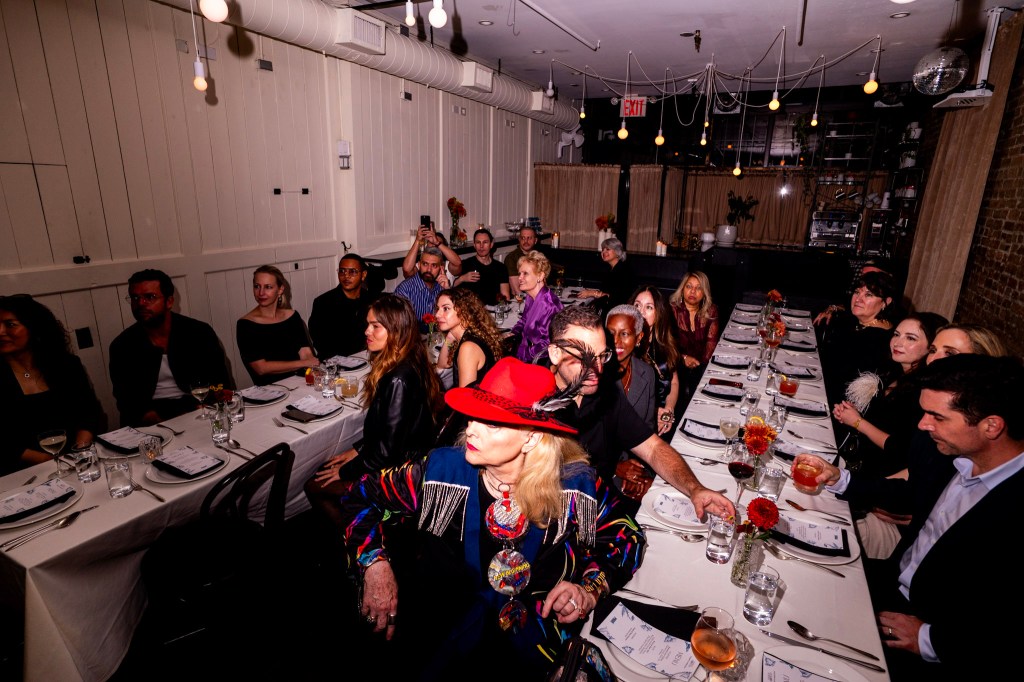
The inaugural New York dinner was the first time the House existed in physical space. What changed once it wasn’t just names on a list anymore?
“Everything became real,” Jordana says. Until that night, Fashion Forward had largely existed through conversations, introductions and a digital space. Then, suddenly, 35 people were sitting around a table together.
“What struck me was how quickly titles disappeared. You had executives, designers, artists, academics, founders, media leaders and people from completely different parts of culture sitting beside one another — and the conversations weren’t about exchanging business cards. People stayed. They moved seats. They introduced one another. Conversations continued after dinner.”
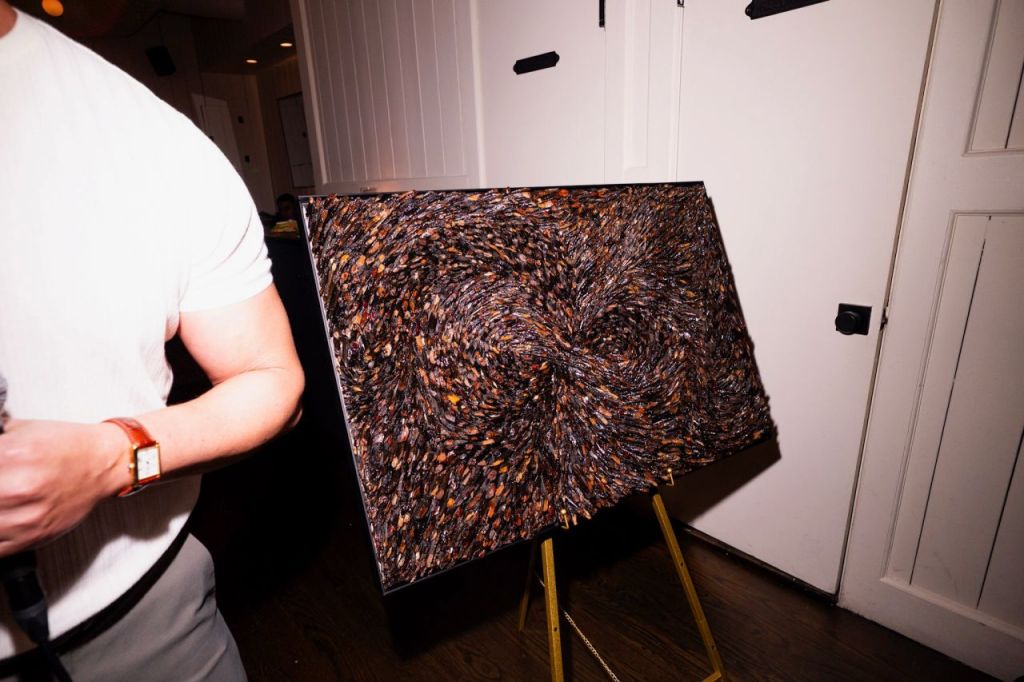
Daniel Acero created an original piece for the House that evening, centered on infinity — a detail Jordana keeps returning to. “In a strange way that became symbolic of what I felt in the room. We had reached something tangible, but it also felt like the beginning of something much bigger. The dinner proved that Fashion Forward isn’t a database of interesting people. The room itself is the product.”
New York, Milan, Miami — each has a completely different relationship to fashion and culture. Is Fashion Forward the same institution wearing different clothes in each, or does it actually shift city to city?
“The values of the House don’t change, but the conversation absolutely should,” Jordana says. “I don’t want Fashion Forward to arrive in Milan and recreate New York. And I don’t want Miami to feel like either one of them.”
Each city, in her read, brings something structurally different to the table: “New York has this extraordinary collision of fashion, business, media, regulation, art and culture. Milan brings craftsmanship, heritage, design, manufacturing and a very different relationship between fashion and legacy. Miami is incredibly interesting because it sits at the intersection of Latin America, art, hospitality, culture, wealth and an emerging creative economy. The House should listen to the city it’s entering.”
The distinction she draws is precise: “Yes, it is the same institution — the same values, the same belief that the future of fashion is shaped through culture — but the people around the table and the questions we ask should reflect where that table physically sits. I think that’s how something becomes global without becoming generic.”
What does success actually look like from here — and what’s the one thing you’re most protective of keeping exactly as it is?
This is where the conversation took a turn I didn’t expect. “There actually won’t be 300 or 500 Founding Voices,” Jordana says. “The first 100 are the Founding Voices, and that designation is now closed. That was intentional. They were the people who said yes when Fashion Forward was still largely an idea, and I want that distinction to mean something permanently.”
Everyone who joins from here enters as a House Member instead — a deliberate line between the people who bet on the premise before there was proof, and everyone who joins after. “Success isn’t going to be measured simply by how quickly we reach those numbers,” she says. “For me, success at 500 is whether someone can still walk into a Fashion Forward dinner and feel that the person sitting next to them was intentionally placed there. It’s whether Christopher or I can still say, ‘You two need to know each other,’ and actually know why. It’s whether someone inside the House can raise their hand with an idea, a question, an ask or an offer and feel that somebody is listening.”
The thing she’s most protective of: “Curation. The day Fashion Forward becomes a room full of people simply because they could afford to enter is the day it stops being Fashion Forward. Growth is exciting. But belonging has to remain intentional.”
A word from the other side of the partnership.
I put one question to Christopher Hunt directly: what’s the operational discipline that actually protects “depth over scale” as the House scales — the specific thing he says no to internally?
“I think the discipline is resisting the temptation to automate the human part,” he says. “There are many things we can systematize as Fashion Forward grows, but curation can’t become an algorithm. Jordana and I talk constantly about who is entering the House, why they belong there, who they should meet and what perspective they add to the broader conversation.”
That discipline has a cost, and Christopher names it plainly: “Operationally, that means sometimes choosing the slower path. We could make onboarding completely frictionless, open the doors wider and grow much faster. But then membership becomes a transaction. The thing we say no to internally is growth for growth’s sake. The number is never allowed to become more important than the composition of the room.”

His closing line is the one I’d put on the wall of the House if I could: “You can scale infrastructure. You can scale programming. You can scale cities. But trust and chemistry have to be built person by person. That is probably the discipline we will have to protect most aggressively as Fashion Forward grows.”
When we first spoke, Fashion Forward was a premise. Now it has a closed founding chapter, an inaugural dinner behind it, and New York, Milan and Miami ahead of it. What hasn’t changed is the wager underneath all of it: that a room curated on purpose is worth more than a room that’s merely full. Whether that holds at 500 members is a question for the next Ledger update. For now, the House is still saying no as often as it says yes — which, if Jordana and Christopher are right, is exactly why it’s still worth getting into.
By Aries Rivera
Founder, The Aries Perspective


Leave a comment