
Educating Desire, Building Permanence
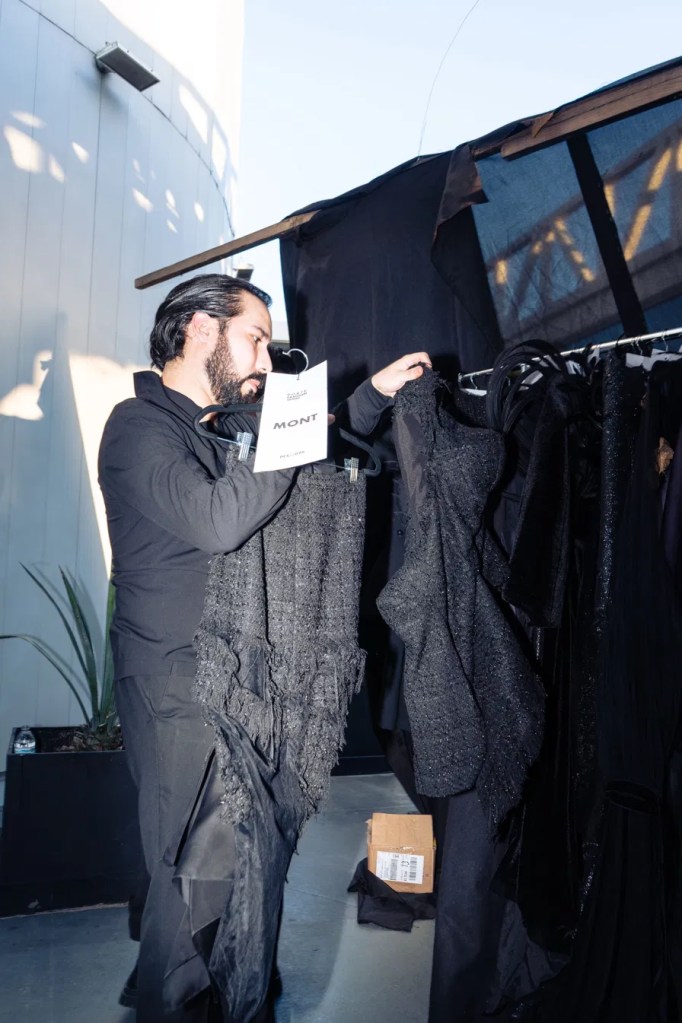
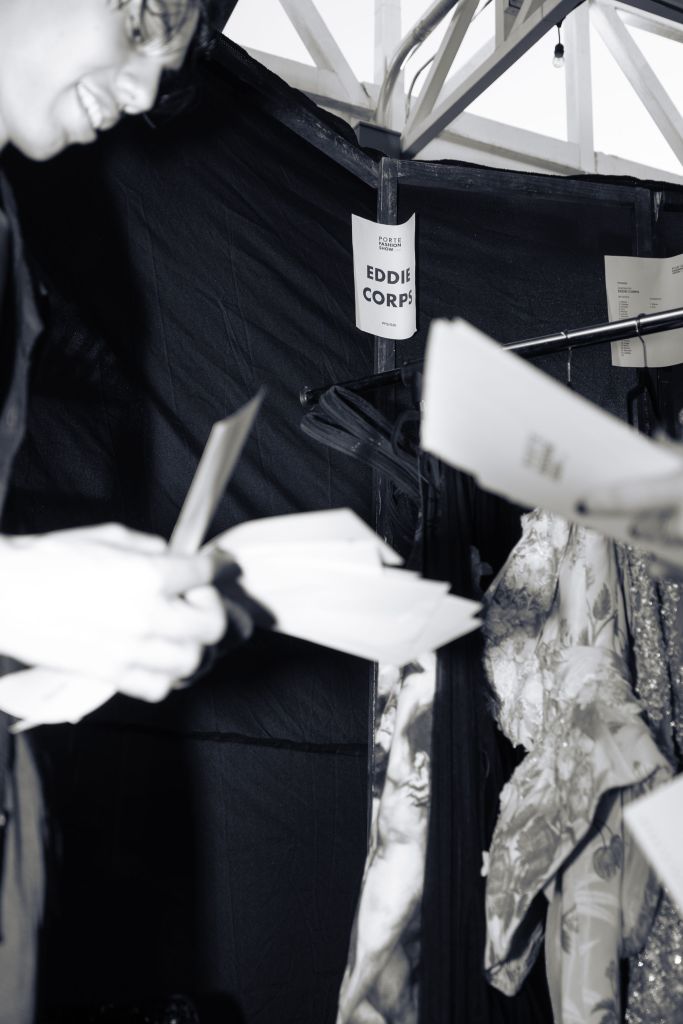
Eddie Corps did not set out to make clothes that look Mexican. He set out to make clothes that last — pieces built with the discipline of couture and the emotional register of a life lived between the California–Mexico border and the ateliers of Paris. That duality no longer reads to him as tension. It reads as language.
Born Eduardo Corpus in Tijuana in 1993, he founded his couture house at seventeen, in 2010 and has spent the years since building a hand under pressure: every piece cut and constructed in his Parisian atelier to haute couture standard, with no ready-to-wear to fall back on. His collections read less like seasonal statements than architecture — rigid tailoring set against embroidery dense enough to move like something alive, a structure built to hold the weight of its own detail without collapsing into spectacle. That precision has already reached beyond the runway: Rosé of BLACKPINK wore his designs for a YSL Beauty campaign, an early signal of the international recognition his atelier is still building toward on its own terms.
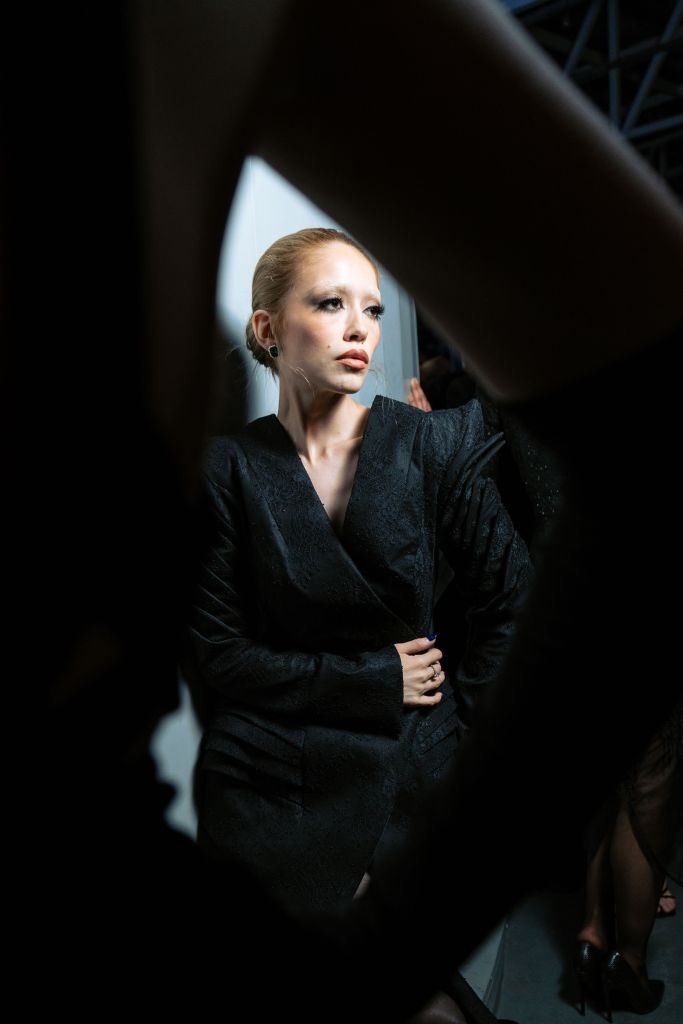
Corps runs his own couture house on a simple, unfashionable premise: that the market can tell you what people are ready to buy, but never what they will desire before they have seen it. His answers below trace how a designer raised in cultural limbo arrived at a singular point of view — and why, five years from now, he is less interested in being bigger than in being complete.
To understand the versatility of a designer of Corps’ caliber, The Ledger posed five questions that led him to open up his creative universe to a curated community of readers.
Does creative instinct or commercial pressure win when building Eddie Corps?
My creative instinct wins, but not irresponsibly. I have never believed that creativity and business are opposing forces; the real sophistication is knowing how to make one sustain the other without allowing either to dilute the vision.
The market can tell you what people are ready to buy. It cannot tell you what they will desire before they have seen it. That distinction is fundamental to me. Inside the studio, I protect the creative proposition first, and then I become extremely rigorous about how it enters the world — through product, positioning, distribution and timing.
I would rather educate desire than follow demand.
How did growing up between Mexico, California and Paris shape your perspective on fashion?
I think that duality started long before Paris. I grew up on the border between Mexico and California, surrounded by a binational reality and, in a way, existing in a certain cultural limbo. My perspective on fashion really began there — somewhere between my own identity and the aspiration toward everything I admired from a distance.
Over time, I realized how much growing up between two cultures shaped the way I see the world. Mexico gave me a sensitivity to beauty, emotion and excess; California, a certain freedom and sense of possibility; and Paris gave me another language — one rooted in discipline, construction and the codes of fashion.
Today, I no longer feel the need to choose between those worlds or consciously fuse them. They have all become part of my language.
I no longer think about which one leads. What leads now is Eddie Corps.
That is perhaps the most important evolution: going from living between cultures to building, from them, a universe of my own.
What does representing Mexico in an international fashion context mean to you?
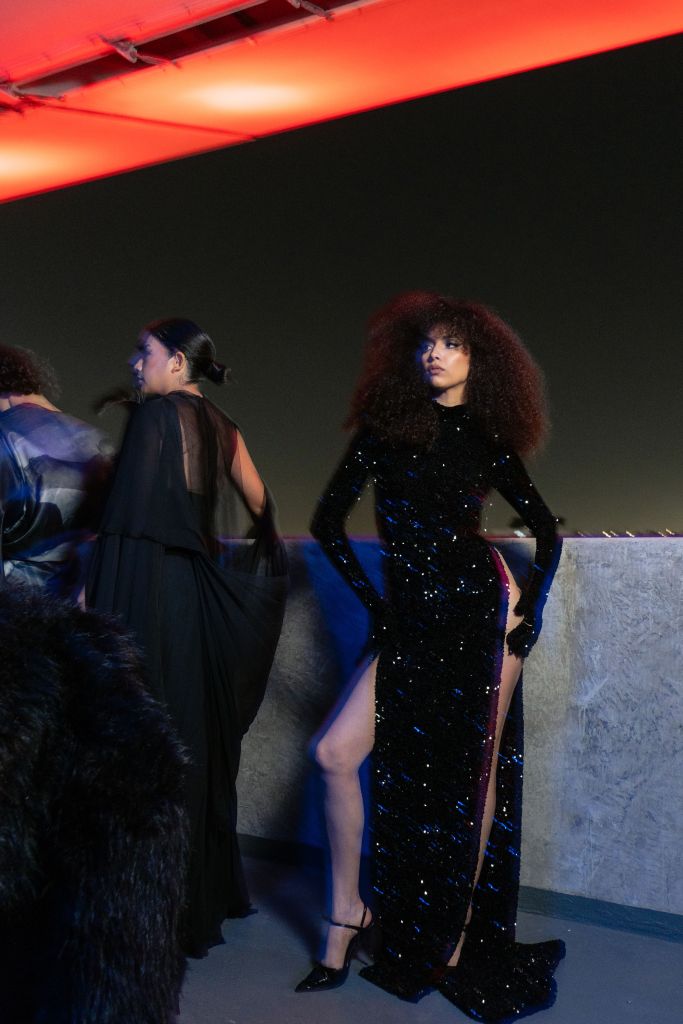
For me, representing Mexico in an international context is not necessarily about making something that looks Mexican. My work doesn’t begin with the idea of translating Mexico into an aesthetic or a recognizable visual language.
Representation is also about being part of this international fashion circuit and showing that, as Mexicans, we can operate at the highest level. In an industry where excellence, precision, discipline and punctuality are fundamental, being able to meet those standards while bringing your own perspective to the table is incredibly meaningful.
Mexico is part of who I am, so it will always exist within the work, but I don’t feel the need to make it visually explicit. What I do feel is a responsibility to represent the Mexicans who work with discipline, precision and ambition in pursuit of excellence.
There is something very powerful to me about representing Mexico not only through aesthetics, but through the standard of the work itself — showing that Mexican talent can belong to, contribute to and excel at the highest levels of the international fashion conversation.
Where do you see Eddie Corps in the next five years?
I’m building toward permanence.
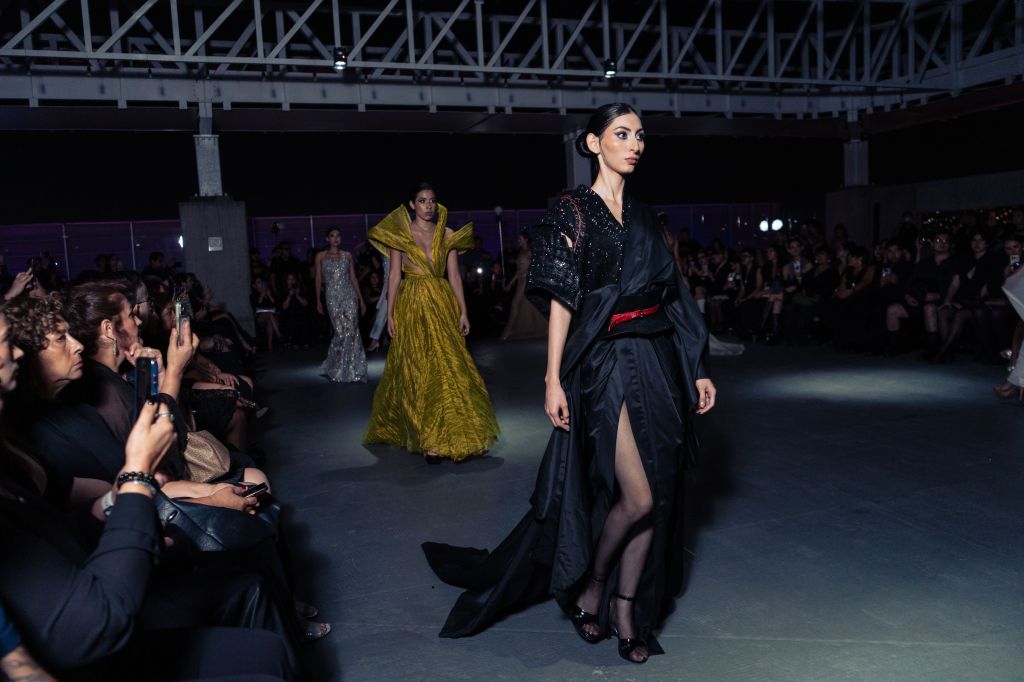
As a couture house, I’m not interested in scale for its own sake. Growth only matters if it protects the integrity of the work. What matters to me is exceptional craftsmanship, a clear point of view, and creating pieces that deserve to exist beyond a single season.
The ambition is to build Eddie Corps into a house with its own language — one rooted in couture, discipline and emotional precision — while creating a legacy that can outlive individual collections.
Over the next five years, I’m less focused on becoming bigger than on becoming more complete: refining our codes, deepening our savoir-faire and establishing Eddie Corps as a true couture maison.
Ultimately, luxury isn’t about rarity alone. It’s about significance.
Which piece best represents where you want Eddie Corps to go?
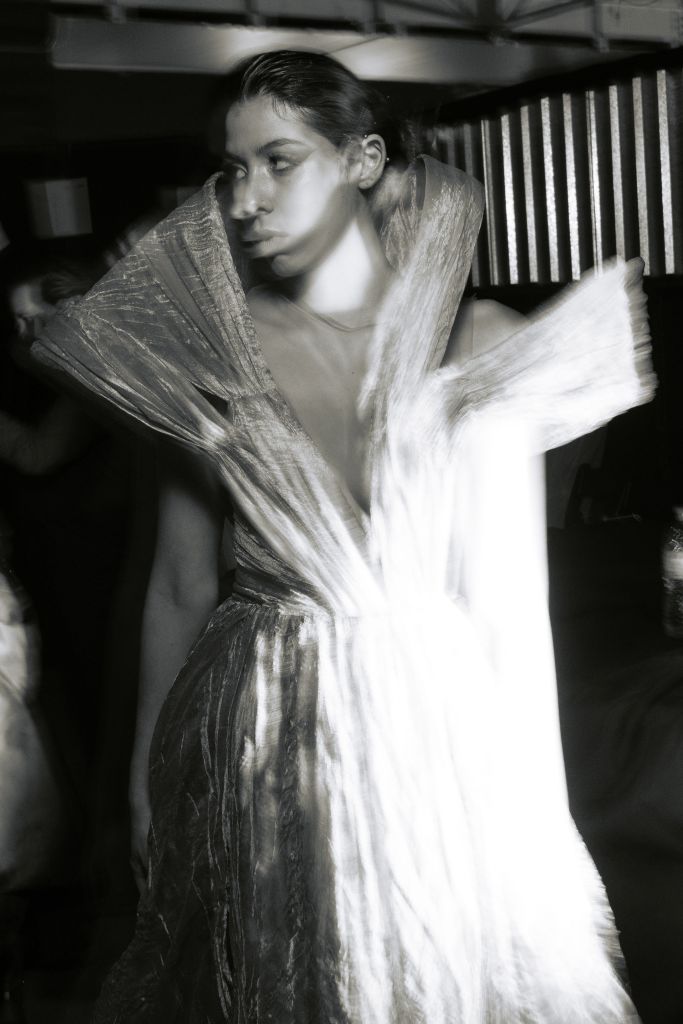
I would choose this piece because it represents where I want Eddie Corps to go. It brings together tailoring, structure and precision with something much more expressive and emotional.
What I find interesting is the contrast: the rigor of the jacket against the intricacy and movement of the embroidery. It feels controlled, but still sensual and alive. That tension is becoming an important part of the language of the house.
It also represents how I see couture evolving within Eddie Corps — not defined by a particular category or by spectacle, but by craftsmanship, construction and the ability to transform something familiar into something exceptional.
I think that’s what excites me most about where we’re going: taking the codes we already understand and pushing them somewhere we haven’t been before.
What stands out across these five answers is not a couturier translating heritage into iconography, but one who has stopped negotiating with his own duality altogether. Corps does not resolve Mexico, California and Paris into a single visual signature — he absorbs them until none of them individually leads anymore, until the only identity left standing is the house itself.
That is a more disciplined form of representation than most designers attempt: not pointing at where you are from, but building something rigorous enough that where you are from no longer needs pointing to. Permanence, in that sense, is not a five-year plan. It is the thing that happens once a designer stops asking to be understood and starts insisting on being undeniable.
All images exclusive to The Aries Perspective, courtesy of Diana Marquez, Mexico, 2026
https://www.harpersbazaar.com.ec/moda/eddie-corps-educa-deseo-lujo-n1863
By Aries Rivera / Founder, The Aries Perspective


Leave a comment